
For founders & owner managers
Build a business that grows without everything depending on you.
Feel confident in your team, get back to the work you love, and come home with enough energy to enjoy the people you’re doing it all for.
Dear friend,
Earlier this year, I made a difficult decision.
I stepped back from the day-to-day leadership of a business I had co-founded and spent years building.
I sometimes describe it as firing myself.
That gets a laugh. But going through it was hard.
When you build a business, you put far more than money into it. You put your judgment, your energy, your relationships, and a fair bit of your identity into it.
Handing it over asks something of you.
And here’s the part that was particularly difficult to admit:
The business started doing better without me in the day-to-day.
I’m pleased about that now. My business partners are doing some wonderful work.
But accepting it meant having a courageous conversation with myself.
What did the business need from me at this stage?
Where was I adding the most value?
And where had my involvement become something I needed to reconsider?
Those are uncomfortable questions when you’ve spent years being the person with the answers.
They’re also questions I now explore with other founders.
Over more than 33 years, I’ve built businesses, expanded them internationally, and sold them. I’ve also lost everything and had to start again.
One thing I’ve learned is that a business changes as it grows.
The founder’s role needs to change with it.
In the beginning, being involved in everything makes sense. You know the customers. You understand the product. You can make a decision and get things moving.
Then the team grows.
There are more customers, more opportunities, and more people needing an answer.
And somehow, the decisions keep finding their way back to you.
You’re working harder. Your days are full. The work you most enjoy starts getting pushed aside.
You might recognise some of that.
Perhaps you’ve built a business you’re proud of, but you’re wondering how to give it what it needs next without giving it every hour you have.
That’s where my work begins.
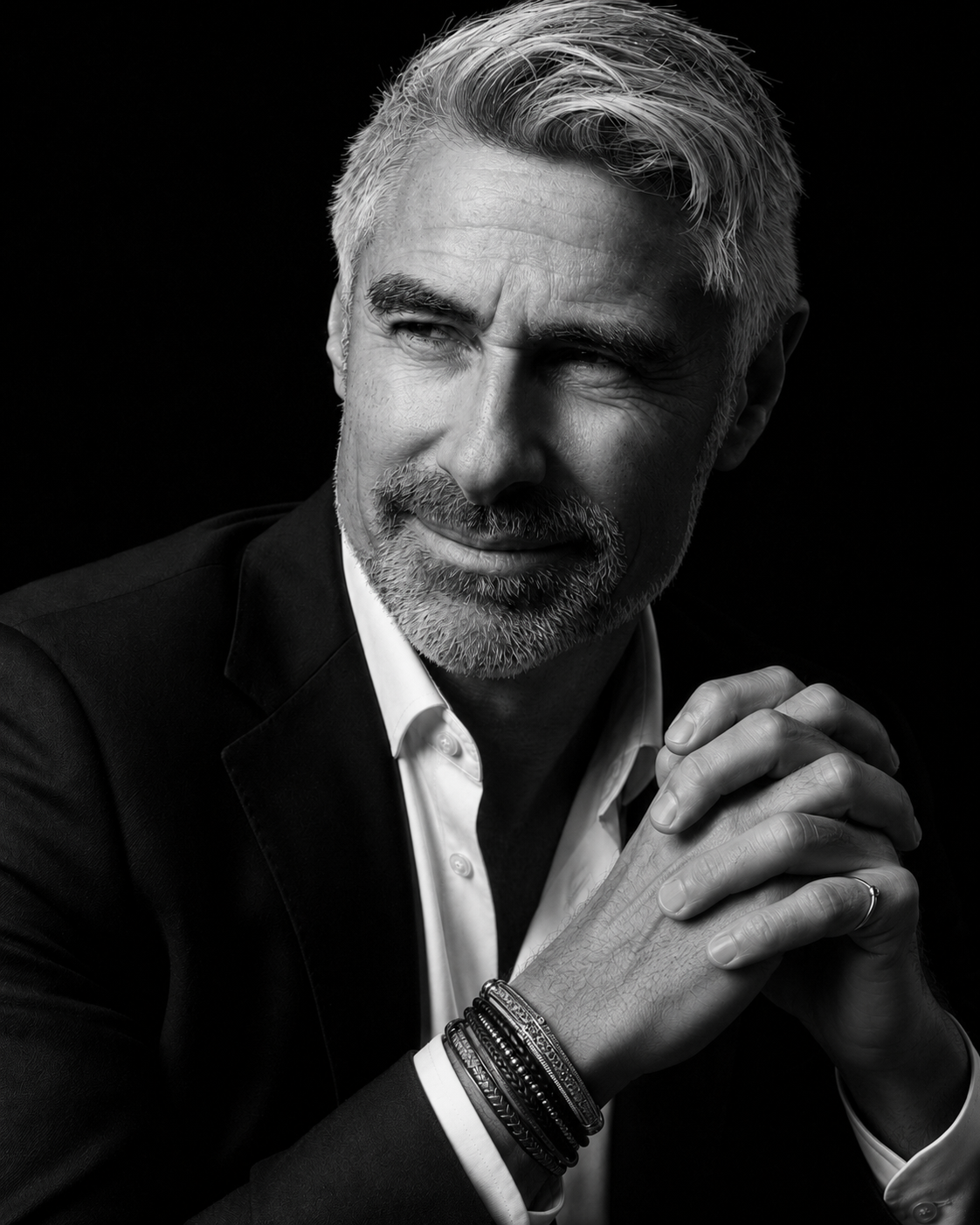
I’m Steve Bambury, founder of Touchstone Advisory.
I work alongside founders and business owners to understand what’s holding their business back, agree what needs attention, and put the right people and practical support around them to move it forward.
Sometimes that means getting clear on strategy.
Sometimes it means helping a team take greater ownership.
Sometimes it means bringing experienced people around the table to help with decisions the founder has been carrying alone.
We start by understanding your situation.
Because before we add anything else to your plate, we need to understand what will actually make a difference.
When you’re inside the jar, you can’t read the label.
It’s a saying I come back to often.
You can know your business intimately and still struggle to see what’s keeping you stuck.
You’re close to the people. You remember why decisions were made. You know how much effort went into getting things to this point.
An outside perspective gives you room to examine it differently.
Take delegation.
An owner tells me their team needs to take more responsibility.
Fair enough. Let’s unpack that.
What is each person responsible for? What does a good outcome look like? Which decisions can they make themselves?
And when they do take something on, do they get the space and support to see it through?
Sometimes those questions reveal that expectations were never particularly clear.
Sometimes the person needs help developing a skill.
Sometimes the founder has become so accustomed to stepping in that everyone waits for them to do it.
Each situation calls for a different response.
That’s why understanding comes first.
Then we decide what matters now.
Scott Cundill, co-founder and CEO of My Most Trusted Network, put it this way:
“A lot of consultants never get to the heart of the problems deeply entrenched in your business, because the team won’t open up to them. Steve is very different. He’s experienced and non-judgemental, and the team opens up and starts to explain what’s really going on. That’s the secret to how he generates impact so quickly. And he will generate impact in your business.”
Scott Cundill, Co-founder and CEO, My Most Trusted Network
Most founders I meet have plenty of ideas.
They can see new markets, new products, better ways of doing things. That ability to see opportunity is often what built the business.
But trying to pursue all of it at once puts enormous pressure on the people who have to make it happen.
Including you.
I’m a big believer in getting clear on three strategic priorities for the next 90 days.
What are we going to achieve?
How will we know we’ve achieved it?
Who owns each piece of work?
Everything else likely has a place further down the track. We can come back to it when the business is ready.
That can be quite a relief.
You can finish the day knowing you’ve moved something important forward, with a clear reason for leaving the other things alone.
And we put the right people around the work.
There will be things your team can do with clearer direction.
There may be responsibilities that need a different owner.
And there will be times when the business needs experience it doesn’t currently have.
I’m a Faraday Certified Chair, and part of my work is bringing relevant expertise into those conversations.
That might involve financial visibility, organisational structure, sales, leadership, or a particular growth decision.
I won’t pretend to have every answer.
If something sits outside my experience, I’ll say so. Then we can work out who needs to be involved.
The important thing is that the advice fits your business, the people involved understand what they’re there to do, and the conversation leads to action.
I work alongside you through that process.
We agree the work, review progress, deal with the obstacles, and adjust as we learn.
You remain the decision-maker.
And as the business develops, we look at which capabilities need to become part of your own team, so you can move forward with greater confidence.
The people side of this matters enormously.
I’ve seen what happens when a team is clear about where it’s going and proud of how it works.
People take ownership. They have better conversations. They understand how their contribution matters.
I’ve also seen how much energy disappears when expectations are unclear, difficult conversations are avoided, or people are pulling in different directions.
That’s why culture is such a substantial part of my work.
At Ray White Austar, I worked with Len Day and his team to develop a shared vision, mission, and core values.
The whole team had a voice in creating them.
“It wasn’t my culture. It wasn’t the owner’s culture. It was our culture, built by the team, for the team. We saw significant growth in market share, better recruitment, improved retention, and more courageous conversations that won new business with our clients.”
Len Day, Ray White Austar
With Trineo, the challenge was different.
They were preparing a government pitch against much larger firms.
I helped them bring their culture and the significance of the work into the way they presented themselves.
“Steve helped my previous company align our pitch for a government department RFP. Up against big four firms, Steve took us on a journey to put our culture at the heart of our response and presentation, which ultimately led to a very successful outcome against those much bigger firms.”
Dan Fowlie, COO and Co-founder, Trineo
Those examples show why I care about the connection between culture and commercial performance.
The way your people work together affects what your customers experience.
And when that is clear and meaningful, it can become a powerful reason for customers and good people to choose your business.
What might this look like for you?
The starting point is a conversation about where you are and what you want to achieve.
From there, a Deep Dive can help us get beneath the symptoms and identify the main constraint.
A focused 90-day engagement gives us space to establish priorities, build a practical plan, and start putting the necessary foundations in place.
A culture engagement brings the team into the work of defining how the organisation operates and making that visible in everyday behaviour.
For businesses needing continuing strategic support, an advisory board brings relevant experience, perspective, and accountability around the owner and leadership team.
The right arrangement depends on what your business needs.
We work that out together.
What I’m looking for matters, too.
I want to work with good people.
People who care about their customers, their team, and the business they’re building.
People with ambition, and the willingness to look honestly at what needs to change.
You don’t need to arrive with everything figured out. Being prepared to say, “I could use some help with this,” is a useful place to start.
I’ll bring my experience, my attention, and an honest perspective.
There will be questions to work through. There will be things to do between our conversations. Some of the changes may feel uncomfortable while we get them into place.
We’ll be clear about what we’re working towards and why it deserves the effort.
For me, the value of that work becomes real when you can trust your team with more, spend time on the things you do best, and see the business moving forward.
When you can finish a day with some energy left.
When you can be with the people you care about and actually be present.
That’s the kind of progress I care about.
If this sounds familiar, let’s have a conversation.
Tell me what’s happening in your business.
Where would you like to take it?
What keeps getting in the way?
Would it be unreasonable to have a short conversation about what’s really holding the business back?
Warm regards,
Steve Bambury
Founder, Touchstone Advisory
Faraday Certified Chair
Accredited Master Neuroplastician®️
P.S. Thinking of someone as you read this?
A useful introduction is often a founder who says:
“The business is growing, but everything still comes back to me.”
They might be facing competing priorities, struggling to get their managers taking ownership, or carrying an important decision they would value some help with.
You can introduce me simply:
“Steve helps founders work out what’s holding their business back and put the strategy, people, and accountability in place to move it forward.”
You don’t need to know which programme they need. An introduction and a little context about what they’re experiencing is enough to start the conversation.